
09. (Book Review) Braiding Sweetgrass
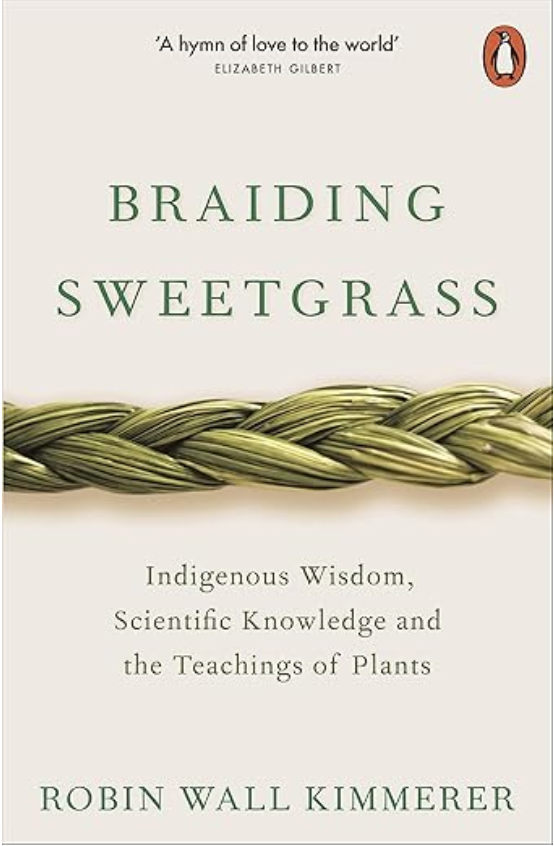
Braiding Sweetgrass: Indigenous Wisdom, Scientific Knowledge and the Teachings of Plants
- Robin Wall Kimmerer
植物と叡智の守り人: ネイティブアメリカンの植物学者が語る科学・癒し・伝統
- ロビン・ウォール・キマラー
In the last few years, I’ve been feeling discomfort and stress whenever I come across news about American politics, economic policy, and ideology—as if someone were scratching a blackboard with their nails. Why should I feel stressed while living in the countryside, more than 10,000 kilometers away from the US? Wouldn’t my life be richer if I focused on the things right in front of me and spent my time more mindfully?
So I decided to read books about nature, or perhaps plants, and came across this one. It was a wonderful discovery.
In this book, Robin Wall Kimmerer, a botanist and a descendant of the Native American Potawatomi tribe, introduces her native language. Puhpowee is one of the words she presents. She translates it as “the force which causes mushrooms to push up from the earth overnight.” It is visually vivid and beautifully conveys motion. The word also reflects a deep respect for the strength generated by nature, as well as a sense of mystery. It suggests that Indigenous people have long lived alongside nature, developing profound insight into the world.
Reading this made me more conscious of the things I usually take for granted—how does a monstera produce its new leaves? Where did the seed come from that allowed a new sprout to suddenly appear in our garden?
Washoku, traditional Japanese colors, were named based on a sensitive awareness of emotions, lifestyle, and the changing seasons. For example, moegi, a color that has existed since the Heian period (8th–12th centuries), is a bright yellow-green that evokes the young leaves emerging in early spring. I imagine buds sensing the gradual rise in temperature and beginning to spread their green surfaces toward the outside world. Perhaps the reason this color evokes motion is that the world around us has long been regarded as a living being.

Moegi 萌木色
#aacf53, R:170 G:207 B:83, C:38 M:0 Y:84 K:0 (参考: weblio)
It feels natural that she writes, “In Potawatomi and most other Indigenous languages, we use the same words to address the living world as we do for our family.” She also writes, “If a maple is an it, we can take up the chainsaw. If a maple is a her, we think twice.” Animism seems to be widely shared among Indigenous peoples, regardless of language or location.
In Japan, there is a belief called Yaoyorozu no Kami, which means that every little thing has a god within it. The idea that even a single grain of rice contains seven gods may have been my first encounter with this “myriad gods” belief. Even now, I feel reluctant to simply wash away hardened grains stuck to the shamoji (rice paddle), because I sense that they carry spirits. Japan and the Potawatomi seem to share a similar respect toward plants and other living beings—the understanding that we sustain our own lives through the sacrifice of other lives.
I do not mean to say that all Indigenous ideas can be directly applied to the modern world, since our lifestyles and philosophies are constantly evolving, and the world we share continues to expand. We are surrounded by oversaturated and overstimulating information that constantly demands our attention whenever we are online, making it difficult to choose with a clear mind. Nonetheless, before making a decision, it may not hurt to pause—take a deep breath, sharpen your sensitivity, and consider where something came from, how it was made, whether you relate to the story behind it, whether you truly appreciate it, and whether you are willing to welcome it into your life.
Lastly, I would like to talk about the enriching power of what might seem like a “misused” combination of verbs and nouns. There is a traditional art form called Kōdō (the Way of Incense), which I recently encountered. At first, I assumed it was simply an art focused on smelling and enjoying different fragrances. How shallow I was. Apparently, one does not merely smell the incense—one listens to or observes it. What does that mean? Through this refined art form, I imagine people experience a completely different flow of time from the one we experience in everyday life. Since rare fragrant woods are used during the ceremony, they reveal a unique depth, texture, and even color that we rarely encounter in daily life. The choice of verbs—listen and observe—makes perfect sense; it invites us to approach scent with attention and reverence.
In the book, she writes, “I close my eyes and listen to the voices of the rain.” This makes me visualize trees stretching toward the sky, the rich scent of soil, the echoing call of a bird, and the wind rustling leaves and twigs. Her deliberate choice of an unexpected verb reintroduces a sense of respect and deep understanding of nature in a society where a clear division is often drawn between humans and the natural world.
There are many more topics I have not mentioned here—the traditional method of planting corn, the grammar expressed in the idea that “a bay is a noun only if water is dead,” the story of the maple tree, and so on. Learning Indigenous wisdom and their relationship with nature gently brings my mind back to the earth, grounding it when it unconsciously drifts into the vast ocean of news and social media.
大きな話をすると、ここ数年特にアメリカから発信される思想、政治・経済政策のニュースを目にする度に、目の前で黒板を爪で引っ掻かれるような不快感とストレスを感じていた。なんでアメリカから1万km以上も離れた片田舎に住みながらそんなストレスを感じなきゃならんのか。ただただ目の前にあるものに目を向け、丁寧に時間を過ごした方が人生豊かなのでは、と思い、まずは本を読もう、そして何か自然に関する本、草花に関する本にしようと探す中で出会ったのがこの本。大当たりだった。
この本ではPotawatomiという北アメリカのネイティブ族であるボタニスト、ロビン・ウォール・キマラーが、ネイティブの言語を紹介している。例えば、Puhpowee。意味は、「夜中にかけてキノコ類が土の中から押し上がってくることを引き起こす力のこと」らしい。めちゃめちゃビジュアライズされてくるし、とても動的。何かその力強さに対する畏怖の念や神秘性も感じられ、ネイティブが、深い洞察力を持って自然と隣り合って生きていた様が表れている。モンステラの葉っぱはどうやって大きくなるのか、昨日芽を出した葉っぱの種子はどこからきたのか、普段気づかないことに今一度目を向けさせられる。
日本の伝統的な色(和色)は、季節の移り変わり、生活スタイル、感情などに由来する繊細な感覚で名付けられているという。例えば、萌木色(もえぎいろ)。平安時代から用いられている色名で「春先に萌え出る若葉のようなさえた黄緑色のこと」らしい。徐々に暖かくなる気温に気づき少しずつ外の世界にその葉を大きく広げる動きが想像できる。色が動的になるのは、自分たちを取り囲む世界が生きたものとして知覚されていた証拠ではないか。
「Potawatomiやほとんどの先住民族の単語はそうで、自分たちの家族を呼ぶように同じ単語を使って生物の世界を形容する」というのも納得だ。「メープルの木が’it(それ)’と称されるならば、私たちはチェーンソーを取り出す。もしメープルの木が’her (彼女)’と称されるならば、一度考えさせられるのでは。」アニミズム的な感覚は、言葉も場所も違えど先住民族の間で共有されているように思う。
日本でも全てのものに神が宿る、八百万の神という信仰がある。‘米一粒に七人の神様’が私自身最初に触れた八百万信仰かもしれない。いまだに炊飯器に残る数粒のお米やら、しゃもじにくっついたちょっと固くなったお米なども、これは取れんと洗い流してしまうのは申し訳ない気持ちになる。なにせお米には命が宿っているのだから。この命をいただいている、という考え方はPotawatomiの植物や人間以外の生き物に対する視点と共通している。
先住民の考えが常に今の世界にも完全に当てはめられるとは思わない。生活スタイル、思想は常に変化しているし、この瞬間を共有している世界は拡大を続け、あの手この手で私たちのアテンションを得ようとする情報の中で、自分に本当に必要なもの何か、自分の心に忠実に選ぶのは結構難しい。ただ、今の自分の選択を少しでも手を止めて考えられる瞬間があるのならば、これはどこでどのように作られたのか、そのストーリーに共感できるか、感謝できるか、自分の人生の一部として共に生きていくことができるか、一呼吸おいて感覚を研ぎ澄ませてみるのもいいかもしれない。
最後に、“適切でない”動詞と名詞のコンビネーションが豊かにする想像性について話しておきたい。最近まで知らなかったのだが、日本には、香道という芸道がある。なるほど、香りの調合をみんなで楽しむ、嗅ぐことにフォーカスした芸道かな、と思ったら、嗅ぐのではないという。香道では、香りを“聞く”/“鑑賞する”のだと。香りが語りかけるのは何か。とても繊細な芸事であり、その空間は日頃過ごす時間の流れとは違った時の刻み方をするのだろうなと思える。香木のみを使うというから、普段出会う香りとはまた違った厚み、質感、色合いを想起させるのだろう。鑑賞するという、一呼吸おかせる動詞のチョイスがしっくりくる。
この本でも作者が次のように表現している文が合った、「目を閉じて、雨の声を聞く。」自然と目の前に森林の中に湧き立つ土の匂い、長く伸びる鳥の鳴き声、時折吹く風に煽られる枝と葉のこすれる音などの情景が浮かんでくる。作者の適切ではない動詞の選び方は、自然と人間とを区別しがちな今の時代に、自然への理解と尊敬の念を今一度思い起こさせてくれる。
伝統的なとうもろこしの植え方、「名詞も動詞もどちらも生きていて生きていない」という文法、メープルの木の記憶など、今回触れてない興味深いトピックが著書の中にはまだまだある。先住民の知恵と自然との関係に触れることで、ニュースやソーシャルメディアに入り込み、意図せず情報の海を浮遊しがちなわたしの身体と精神を心地よい重力で地上に引き戻してくれた気がする。
