The House of Time, Renovation, Presence of Absence 時の家, リノベーション、不在の存在
リノベーションの音と「時の家」
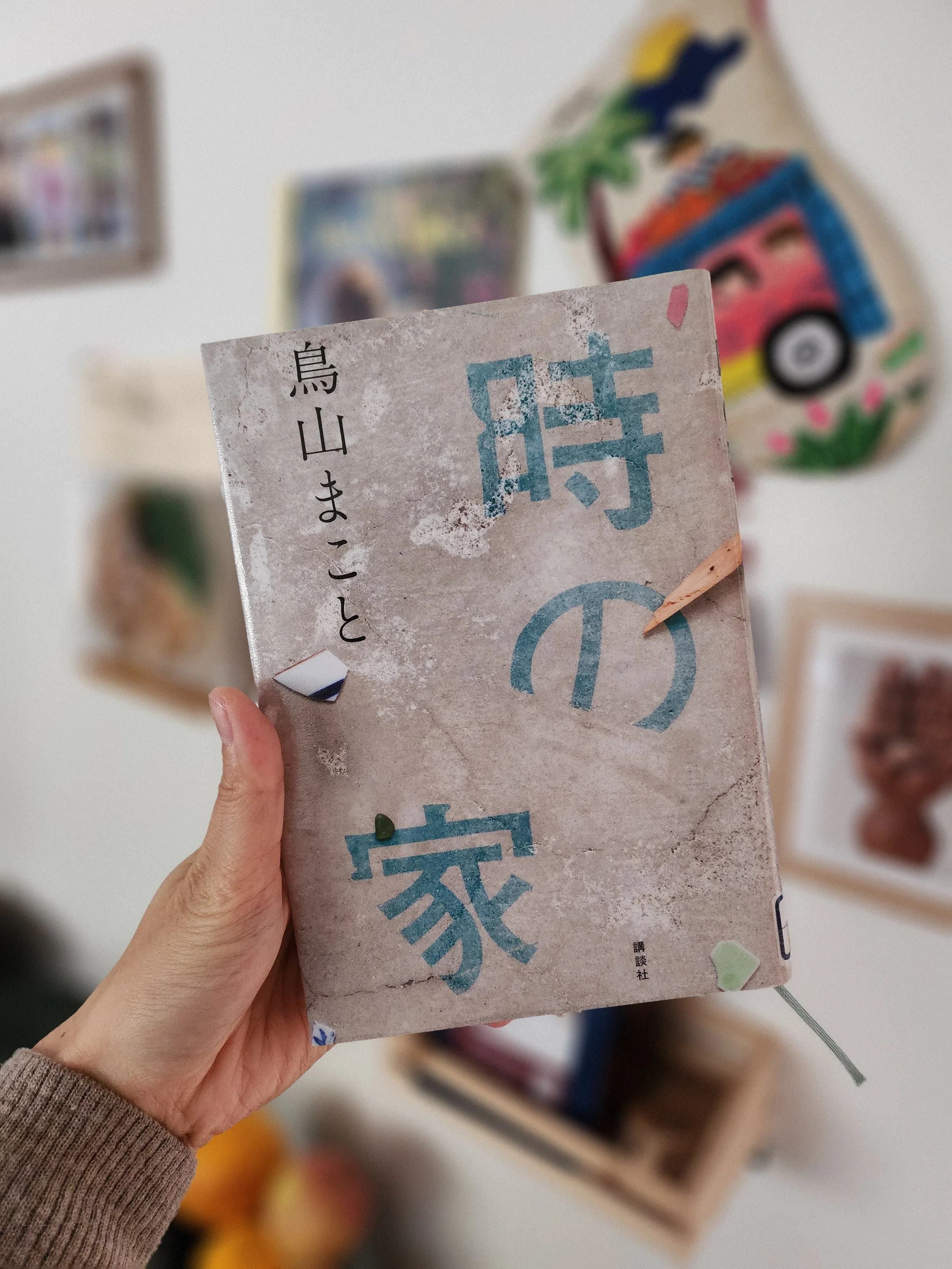
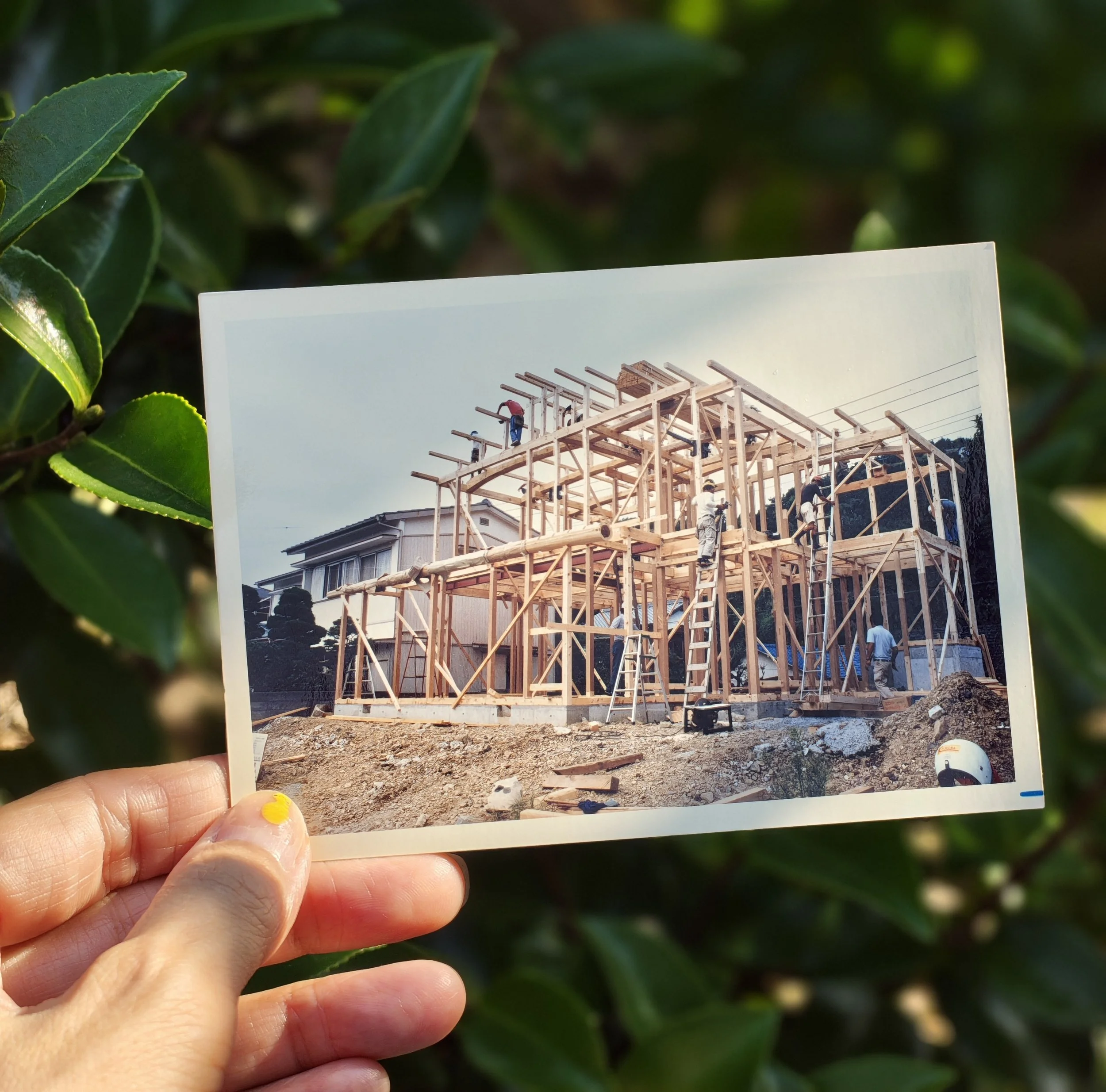
先月、家の中ではノコギリの切る音と板を叩く音が響いていた。12畳ある畳の部屋をフローリングにする真っ最中だったからだ。そんな作業音を耳にしながら、最近読んだ「時の家」を思い出していた。冒頭から、まるでその場に立ったかのような、輪郭のはっきりとした家の中の様子が書き記されていて、これを書いた人は“中の人”なのではと思ったら、著者は建築家でしっくり。話の中心となるのは藪さんという建築士が建てた家。藪さんと、彼と親交のあった少年、そして代々の住人たちの物語を、家が紡ぐ。その家づくりに関わった人たちの痕跡を抱き続けながら、住み手が変われば新しい住み手の記録が自然と蓄積され、その最後の時まで、家は時を刻み続ける。
家を建てる人たち
一軒家には住んだことはあったものの、10代の頃は両親の建てた家に住んでいただけですでに箱になったものであったし、大学〜就職して以降はアパート暮らし。家具を持ち込めば住めますという場所でしか暮らしてこなかったため、その場所が出来るまでの間にどういった思索が重ねられ、設計され、職人が集められ、どのように施工に至るのか、家づくりに携わる人々の存在に思いを巡らせたことなかった。どこかにあるスペースに自分を嵌め込むことが当然だったのだ。なので、祖父母の家に住み始め、アップデートが必要な部分を少しづつリノベしようと思い立ち、建設会社と会話した時、「ダイクさん」「タテグヤさん」「トソウヤさん」などの役職を出しながら説明を受けてもその意味がストンと落ちてこなかった。一人の医師が骨折、視力低下、皮膚炎とどんな不調も診察できる訳ではないように、家にもパーツによって専門としている人がいるのだと、初めて気付かされたのだった。
思いがけないタイムカプセル
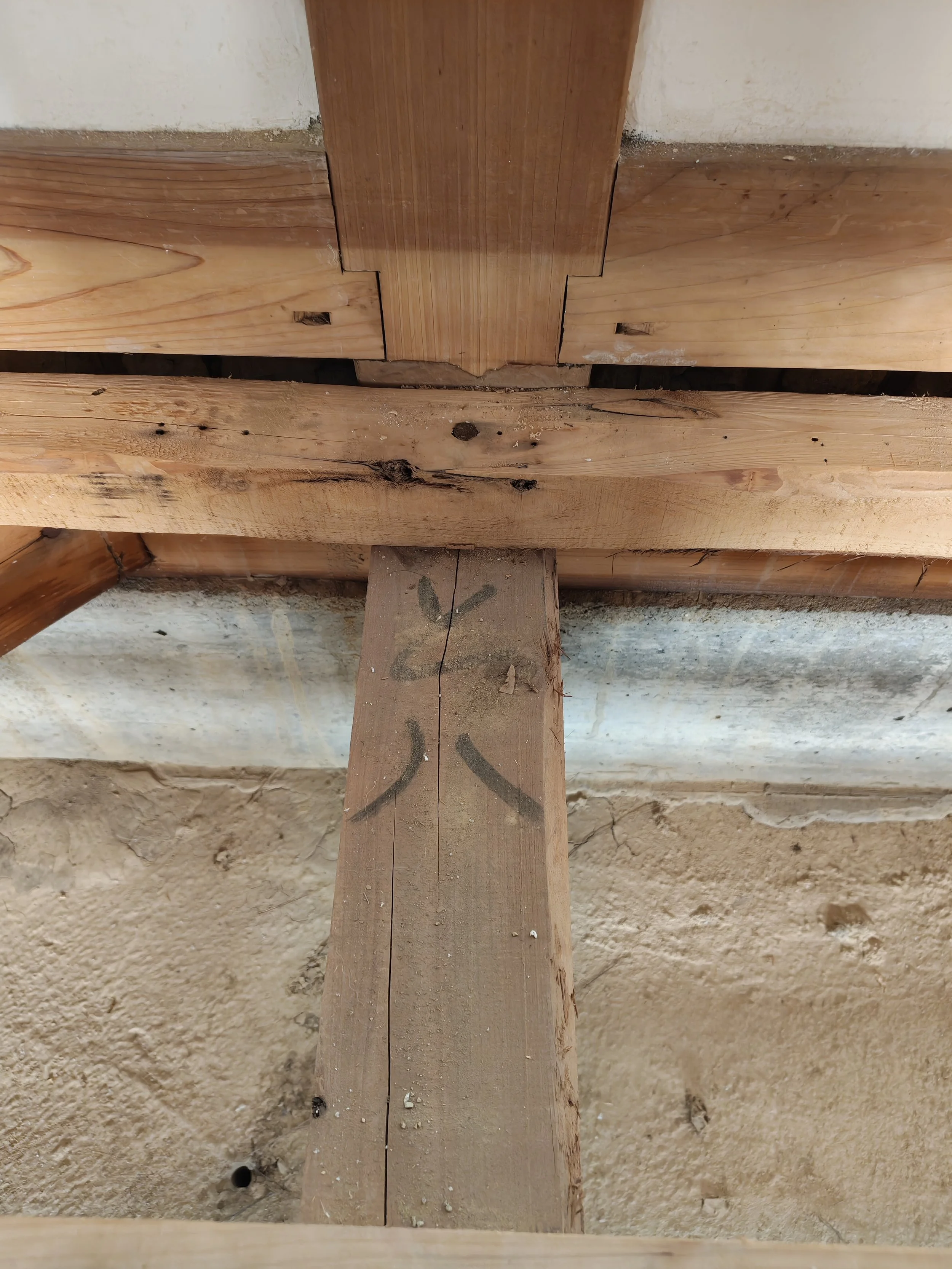
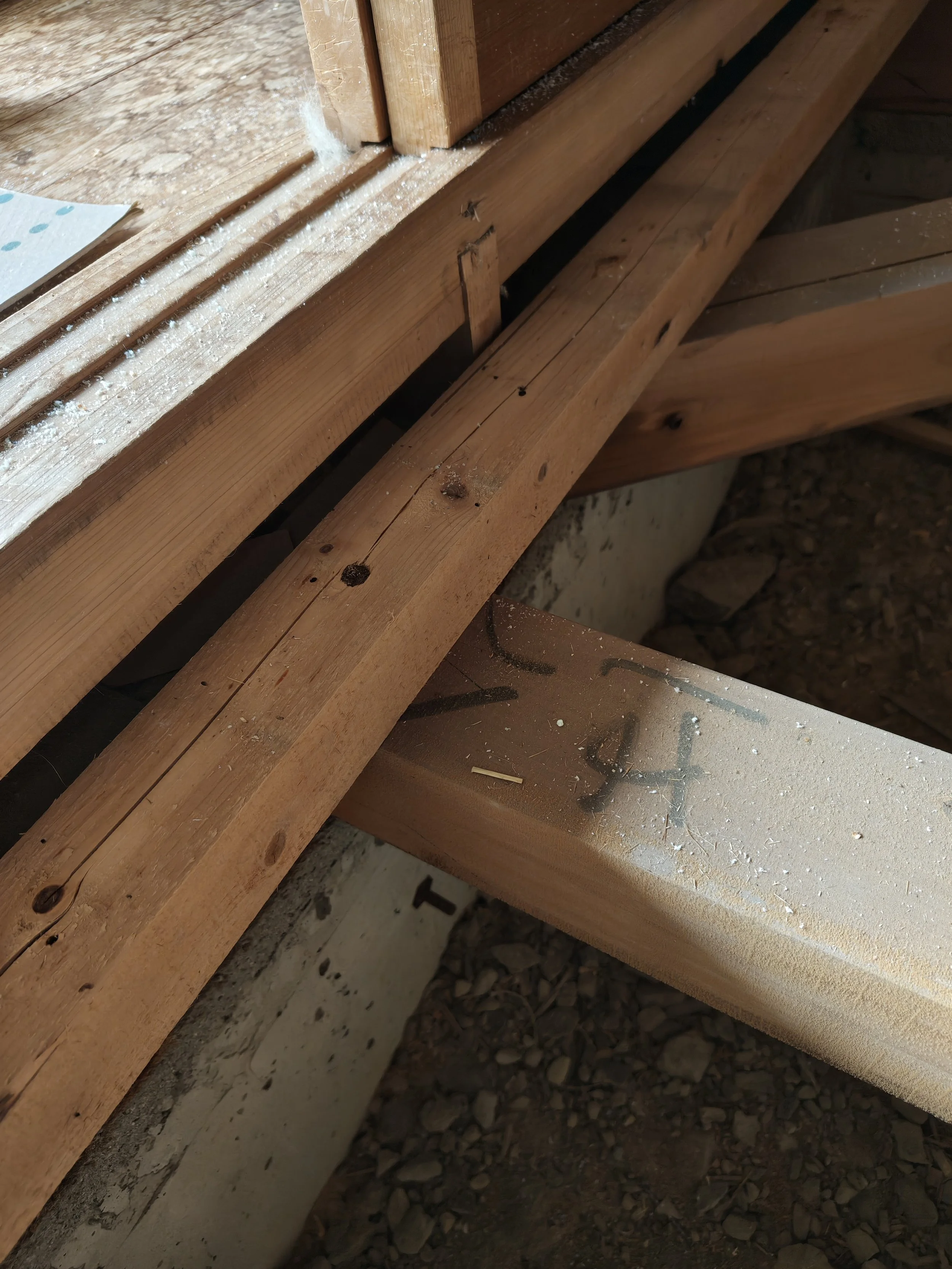
フローリング施工は専門家の一人、大工さんの仕事。大工さんの休憩中に部屋を覗いてみると、部屋の半分の畳が撤去され、普段は見えない根太という床下の横木が見えるようになっていた。よく見てみると、建築当時の大工さんが書いたメモが見えた。片方の端には「は八」、反対の端には「と八」。油性ペンではなく筆で書かれているようにも見える。調べてみると、その文字は木材を正しい位置に配置するための「いろは番付」というものだそうだ。工場での機械印刷がない時代の手作業の名残。それはタイムカプセルのようで、当時そこで作業していた人たちが沸き立つような不思議な感覚だった。次部屋を覗いた時にはすでに断熱材が被せられ、今の時間軸がそこにあるだけだった。思いがけない床下の記録に家が重ねてきた時を思った。
瞬間の温度感、情景、感情
完成した家を見て分かるのは、根太のメモもそうだが、職人は作業の痕跡を残さないということ。ただ、作者は自分たちの家が建った後、焦燥感を覚えたという。「家は今実際に建って、その中で私たちは暮らしているのだけども、この家が建つまでの過程に見えたり感じたり語った様々は、どこかに埋まってしまったかのように今はもう目には見えない。そんな当たり前のことがどうにも歯痒く、見過ごしてしまってはいけないことのように思えてしまう。」(作者noteより)そこにあった温度感、会話、情景、感情を残したいという一心でしたためられた小説であった。そこにあったものの、今は不在の存在を浮かび上がらせる作品は、小説に限らず自然と惹かれるものがある。刹那的な儚さを含んでいるからだろうか。
例えば、スーザン・フィリップス(Susan Philipsz)というアーティストの作品。彼女の作品を初めて体験した時の感動が忘れられない。彼女は自分の声というエモーショナルなインストゥルメント(楽器)を使って、特定の場所に眠る歴史や記憶を綿密なリサーチに基づき‘彫刻する’サウンドインスタレーションを行う。その場に立ち、彼女の声を聴くと、時空を超える感覚と、立っているその場所にいる感覚が研ぎ澄まされる。戻ってこない歴史と声という掴みどころのない媒体が、刹那と不在の大きさを冗長させ、存在を切望させるのだろう。小説では、形には残らない声、温度、感情やその時の光が、作者のあたたかな眼差しと共に取りこぼさないようにていねいに紡がれ、大切に繋ぎとめられていた。ちょうどリノベーションというタイミングの前にこの本に出会えたのは幸運だった。実際に家が過ごしてきた時間を目の当たりにし、職人の行き来する情景を経験する中で、記録には残らないものが記憶と深く結びついた。
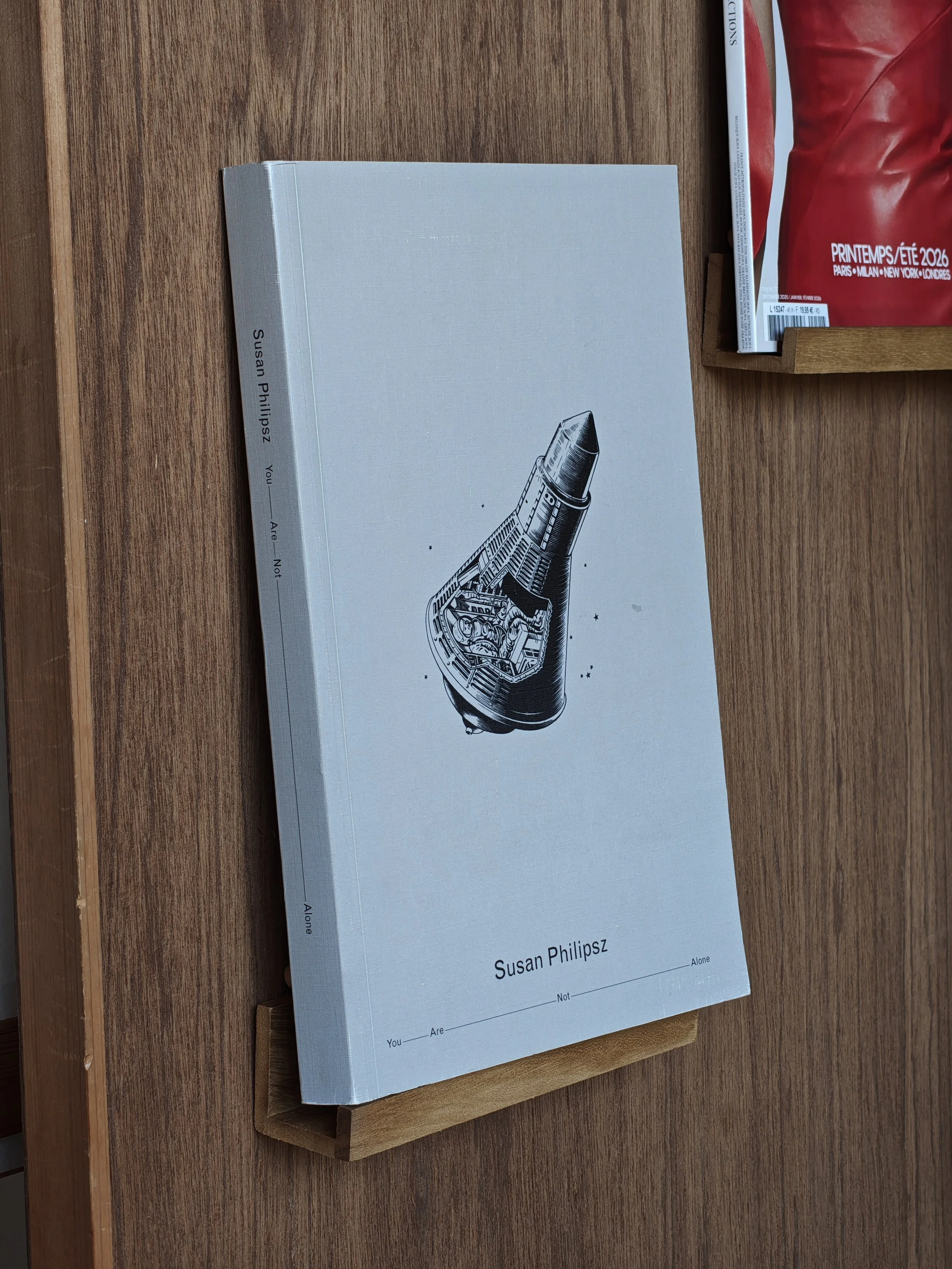
You Are Not Alone - Susan Philipsz, a compilation of her works that describes her process of creating voice sculpture.
畳からフローリングへは1週間程度の作業で終わった。欄間や床の間はそのままに畳の部屋の名残も残しつつ、職人さんたちの手を借りて私たちの時代を重ねた。「は八」と「と八」はわたしの記憶に残り、床下で静かな不在の存在を放っている。
The Sounds of Renovation and ‘The House of Time’
Last month, the sounds of sawing and hammering boards echoed throughout the house. That was because we were right in the middle of converting a 12-tatami-mat room into hardwood flooring. As I listened to those construction sounds, I found myself thinking about The House of Time, a book I read recently.
From the very beginning, the interior of the house is described with such sharp clarity that it feels as if I was standing right there inside it. When I caught myself wondering if the author might be an "insider," learning that he was an architect made everything click into place.
At the center of the story is a house built by an architect named Yabu-san. The house weaves together the story of Yabu-san, a young boy with whom he shared a close friendship, and the generations of residents who lived there. While continuing to hold the traces of the people involved in its creation, the house naturally accumulates new records with each change of resident, quietly keeping time until its final moment.
People Who Build a Home
Although I had lived in a single-family house before, in my teens it was simply a home my parents had built—a completed "box"—and from my university years through starting my career, I lived in apartments. Having only ever lived in places where all you needed to do was bring in your furniture to make it livable, I had never given much thought to the people involved in homebuilding: the layers of thought, the design process, the gathering of craftspeople, and the construction steps required to bring a place into existence. Fitting myself into a space that already existed somewhere was simply the natural way of things. So, when I began living in my grandparents' house and decided to renovate parts of it bit by bit, I found myself bewildered during conversations with the construction company as they explained things using roles like "Daiku-san" (carpenter), "Tateguya-san" (joiner/fitter), and "Tosouya-san" (painter). Just as a single doctor cannot treat every ailment—from bone fractures to eyesight to dermatitis—it was then that I realized for the first time that a house, too, has specialists for each of its parts.
An Unexpected Time Capsule
Flooring installation is the job of one such specialist: the carpenter. Peeking into the room during the carpenter’s break, I saw that half of the tatami mats had been removed, exposing the floor joists (neda) underneath that are usually hidden from view. Looking closely, I spotted notes written by the carpenters who originally built the house. On one end was "Ha-8" (は八), and on the opposite end was "To-8" (と八). It even looked as if it had been written with a brush rather than an permanent marker. Upon researching, I learned that these characters were part of an Iroha numbering system used to position timber correctly—a remnant of handcraftsmanship from an era before factory machine printing. It felt like a time capsule, giving me a strange sensation that made the presence of the people who had worked there back then come vividly alive.
The next time I looked into the room, insulation had already been placed over them, and only the current timeline remained. Seeing that unexpected record under the floor made me reflect on the time the house had accumulated.
Looking at a finished house reveals that craftspeople leave behind no trace of their work—much like those notes on the joists. However, the author mentioned feeling a sense of impatience or restlessness after their own house was built:
"The house now actually stands, and we live inside it, but the various things seen, felt, and spoken during the process of building it now seem buried somewhere, no longer visible to the eye. This completely natural reality feels somehow frustrating, as if it were something that shouldn't be overlooked." (From the author's article in ‘note’)
This novel was written out of a single-minded desire to preserve the warmth, conversations, scenes, and emotions that were present at the time. Works that bring to light what was once there, but is now absent, have an inherent pull for me, and not just in literature. Perhaps it is because they contain an ephemeral transience.
Take, for example, the work of the artist Susan Philipsz. I will never forget the emotion I felt when I first experienced her art. Using her own voice as an emotional instrument, she creates sound installations that "sculpt" the history and memories sleeping in a specific location based on her meticulous research. Standing in that space and listening to her voice, your sense of transcending time and your awareness of standing right there in that exact place are heightened. Unrecoverable history combined with the elusive medium of the voice amplifies the scale of ephemerality and absence, making you yearn for that existence.
In the novel, the unshapeable voices, warmth, emotions, and the light of those moments were carefully woven together and tenderly anchored alongside the author's warm gaze, ensuring nothing was lost.
I was fortunate to encounter this book just before the timing of our renovation. Witnessing firsthand the time the house had lived through, and experiencing the coming and going of the craftspeople, things that leave no official record became deeply bound to my memory.
The transition from tatami to hardwood flooring took about a week to complete. While leaving the ranma (transom) and tokonoma (alcove) intact to preserve traces of the original tatami room, we layered our own era onto it with the help of the artisans. "Ha-8" and "To-8" remain in my memory, exuding a quiet, absent presence beneath the floor.